Patient Resources

Medial Knee Instability

The medial, or inside, of the knee is the source of the most frequent knee ligament injury. While commonly referred to as the “MCL”, the medial side of the knee is actually composed of several important structures, with several components, which must be assessed to determine the best way to get back to proper functioning. […]
Medial Knee Instability

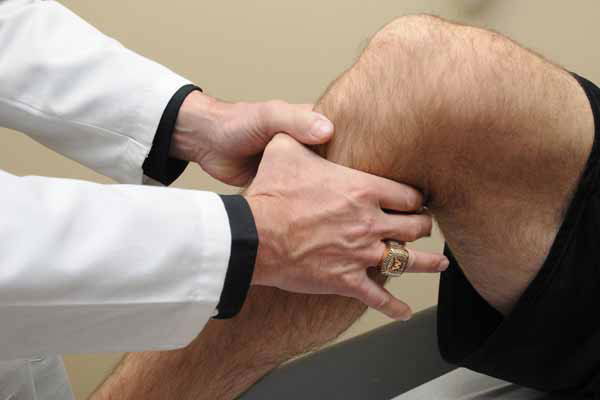
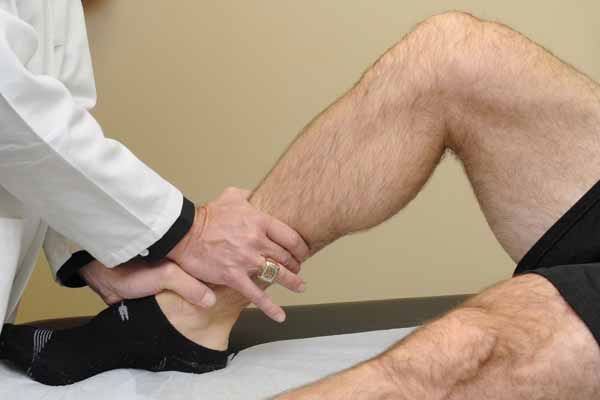
Posterior Drawer Test

(Click to Enlarge)

The posterior drawer test is the mainstay test for assessment of a PCL tear. However, it has been determined to be relatively inaccurate for objective testing for preoperative and postoperative assessment and should be augmented with the use of […]

Posterior Drawer Test

Quadriceps Active Test

(Click to Enlarge Image)

The quadriceps active test basically starts at the initial position of the tibial drop back sign. In a patient with an intact PCL, when one fires their quadriceps mechanism at 90° of knee flexion, the knee should not move […]

Quadriceps Active Test

Tibial Drop Back Sign

With the tibial drop back sign, one relies on gravity with the knee flexed to 90° to compare if there is any “dropping back” of the tibia on the injured side compared to the normal contralateral knee. In this test, one compares the prominence of the proximal tibia to the femoral condyles with the knee […]

Tibial Drop Back Sign

Assessment of Posterior Knee Instability

The posterior cruciate ligament is the main structure which provides provides posterior stability to the knee at 90° of flexion. At this position, it performs approximately 90-95% of the total force to preventing posterior translation. For this reason, most assessment for posterior knee translation instability is performed at 90° of knee flexion.

Assessment of Posterior Knee Instability

KT-1000 Testing

(Click to Enlarge Image)

The KT-1000 test is performed to provide an objective assessment of the amount of increased anterior knee translation between 20 and 30 degrees of knee flexion.  The KT-1000 test was developed by Dale Daniel, MD, in San […]

KT-1000 Testing

Pivot Shift Test

(Click to Enlarge Image)

The pivot shift test assesses for anterolateral rotatory instability of the knee. It is a very useful test to determine if the patient will have a symptomatic ACL tear or not. With this test, the examiner applies an […]

Pivot Shift Test

Anterior Drawer Test

(Click to Enlarge)

The anterior drawer test is more of a historical test rather than an actual useful clinical test. It was originally felt that it was positive when there was an ACL tear, however the amount of increased translation at 90° […]

Anterior Drawer Test

Lachman’s Test

(Click to Enlarge)

The Lachman’s test is performed between 20°-30° of knee flexion, which helps to isolate the affect of the ACL providing stability to anterior translation of the knee. It is absolutely essential during this exam that the patient relax as […]

Lachman’s Test

Anterior Stability Testing

Anterior stability testing is performed primarily to assess the integrity of the anterior cruciate ligament (ACL). The ACL is the main stabilizer to anterior translation of the knee between 20°-30° of knee flexion. For this reason, the majority of knee stability testing for the ACL is performed at this angle. In addition, the ACL is […]

Anterior Stability Testing
Go to Top