


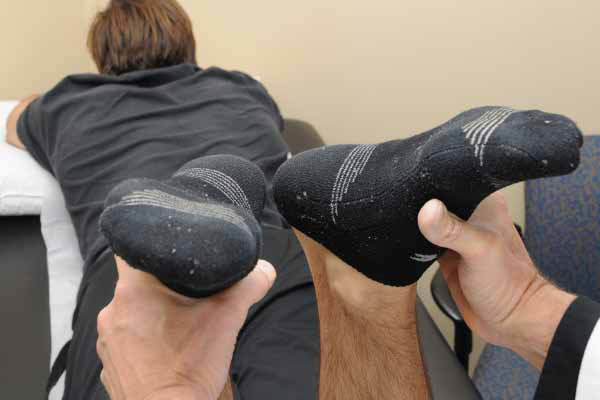
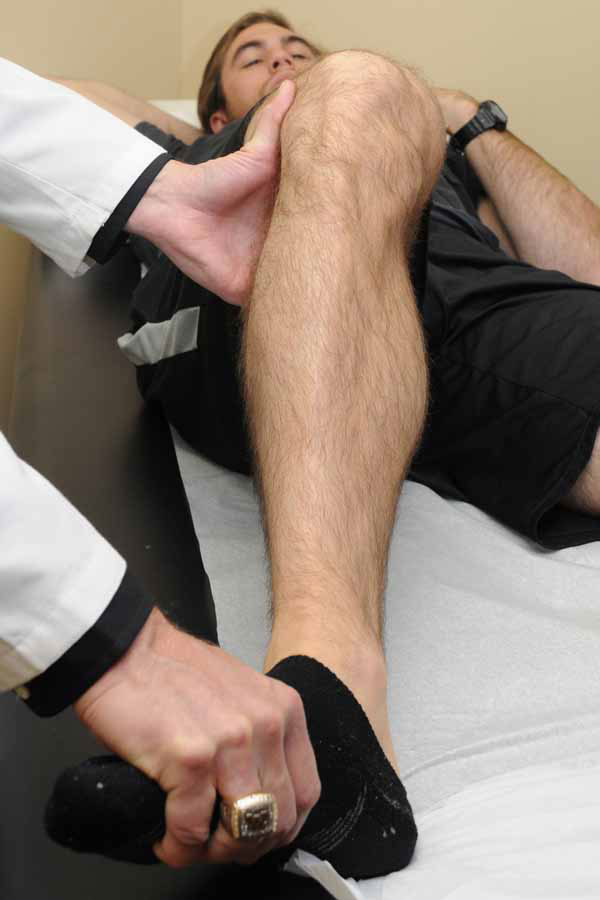
Dial Test at 90° of Knee Flexion
 (Click to Enlarge)
 (Click to Enlarge)
As indicated for the dial test at 30°, the dial test at 90° is also performed to determine the amount of external rotation of the […]
(Click to Enlarge)
(Click to Enlarge)
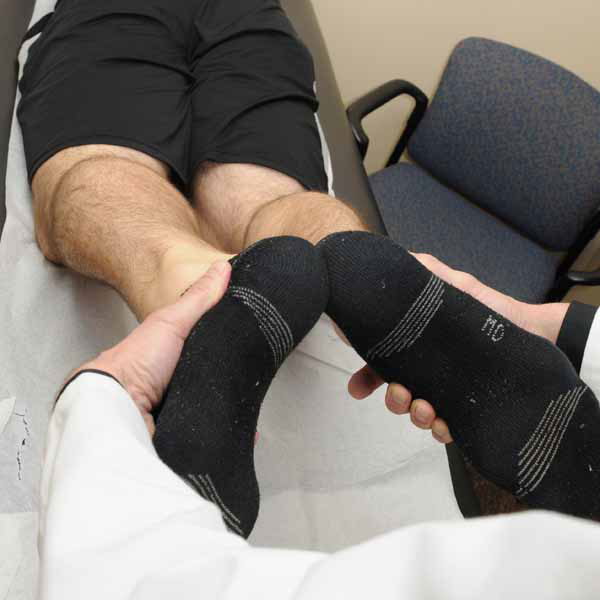
As indicated for the dial test at 30°, the dial test at 90° is also performed to determine the amount of external rotation of the […]
 (Click to Enlarge)
 (Click to Enlarge)
The dial test is basically utilization of previously published biomechanical studies determine the amount of increased external rotation that occurs with the knee. These biomechanical […]
 (Click to Enlarge)
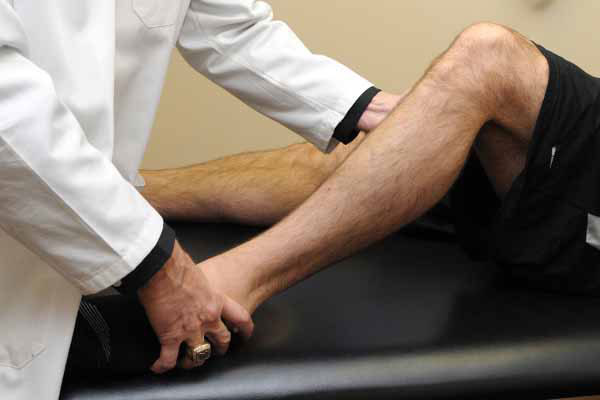
The posterolateral drawer test is important for assessing the integrity of the popliteus components of the knee. The starting point for this test is similar to the posterior drawer test, but the foot is externally rotated about 15°. With this […]
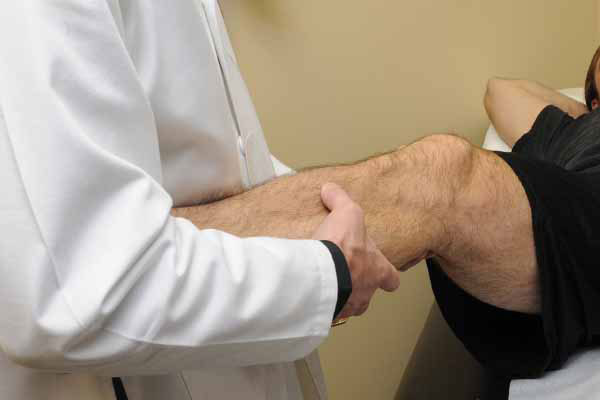 (Click to Enlarge)
The varus stress test at 20-30° of knee flexion is the actual workhorse test to perform when one is assessing for posterolateral instability of the knee. This test isolates out the function of the fibular collateral ligament. In effect, […]
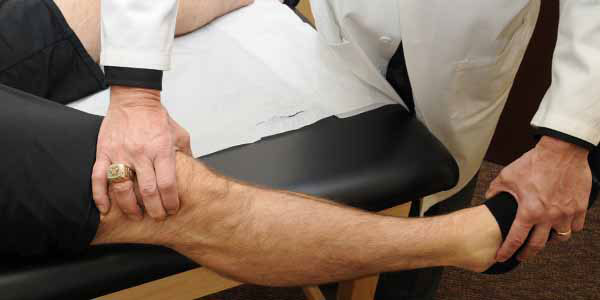 (Click to Enlarge)
A positive varus stress test at 0° of knee flexion is usually indicative of a severe combined posterolateral corner and cruciate ligament injury. In addition, it is not uncommon to have an avulsion of structures off the fibular head […]
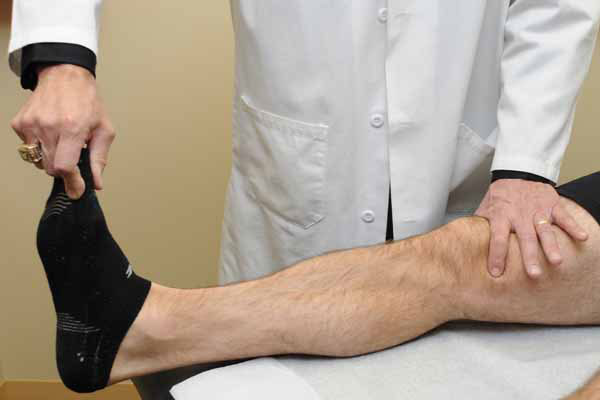 (Click to Enlarge)[/caption]
The external rotation recurvatum test is the first test performed to evaluate a patient with potential posterolateral rotatory instability. In this test, the examiner determines if there is an increased amount of knee hyperextension compared to the contralateral side. The test […]
The posterolateral corner of the knee is a very complex area with many important structures which are intricately related to prevent both increased lateral compartment gapping and rotation. There are many different tests which are utilized to assess for posterolateral rotatory instability of the knee. While some examiners feel that the increased amount of varus […]
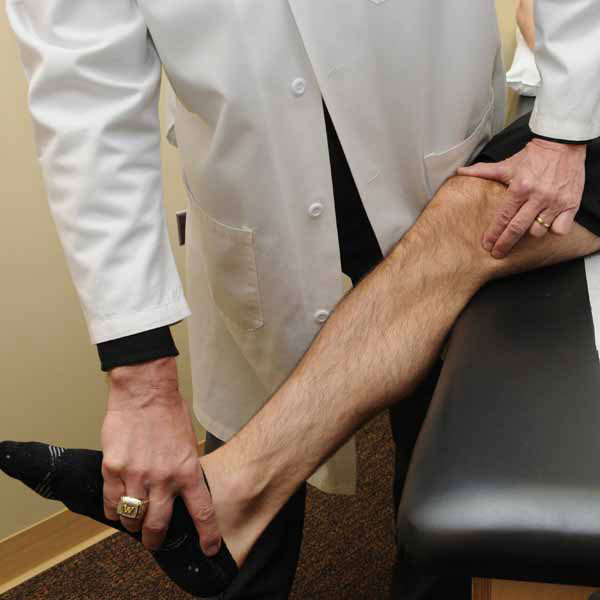
The anteromedial drawer test assesses the amount of increased external rotation due to a medial knee injury. It is performed with the knee flexed to 90°, the foot in external rotation, and an anteromedial rotatory force is applied to the proximal tibia. This test is commonly confused with the posterolateral drawer test (to […]
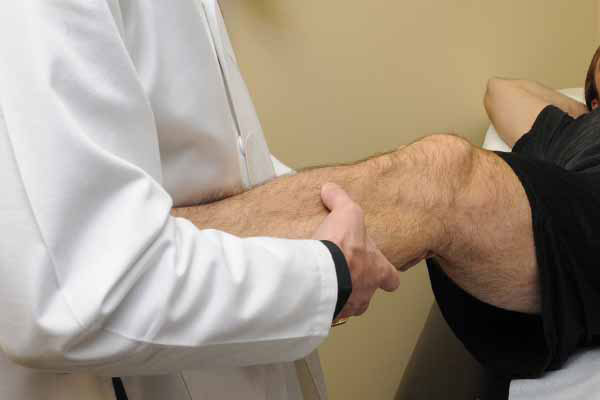 (Click to Enlarge)
The valgus stress test at 30° is the workhorse test for determining if there is a medial knee injury present. The main structure which provides valgus stability to the knee at 20° – 30° of knee flexion is the […]
 (Click to Enlarge)
With a valgus stress test at 0°, one is assessing for the potential of a combined medial knee and cruciate ligament injury. When one applies a valgus force to the knee in full extension, the amount of medial gapping […]